You're visiting a new informational site devoted solely to conifers in Zone 8A.
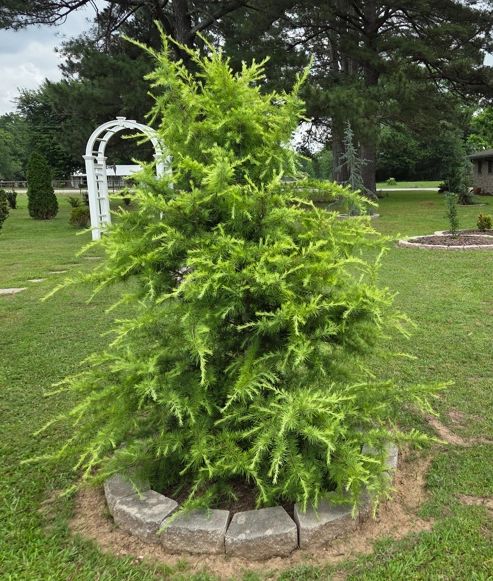
Cedrus/Cedar
An almost bullet proof choice for any southern landscape, cedars offer numerous options.
The images shown below are pictures taken of actual trees growing in NE Texas in this garden collection.
Primary concerns for planting in Zone 8A
- Planting in a low/poorly drained location
- Bagworms
- Needs full sun for 6+ h
Deodara/deodar
Karl Fuchs
Karl Fuchs
Karl Fuchs
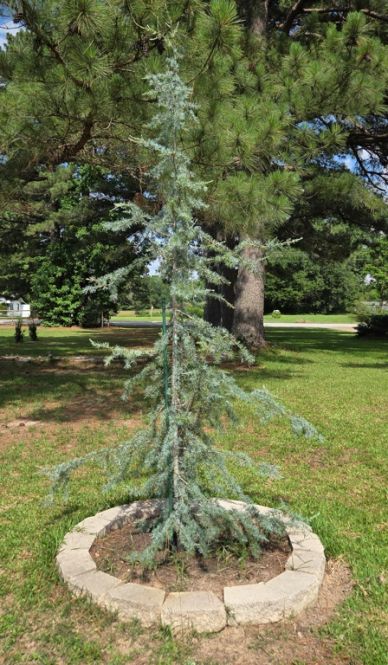
Planted Spring of 2022.
Karl Fuchs was harder to locate until recent years. These are awesome cedars because they take pruning well and flush stunning new growth quickly. This particular tree was actually purchased from a Home Depot garden center. Sold in a five gallon container it was about 4' tall when planted. It's an excellent example of why big box nursery operations should not be avoided completely as large healthy trees at small tree online pricing is common! I couldn't be happier with this tree. It's currently about 10" tall in 2026.
Aurea
Karl Fuchs
Karl Fuchs

Planted Spring of 2022.
This Aurea was another Home Depot find. It was in a five gallon pot, healthy, well rooted and very full. It has flushed new growth twice this year (2026) and shows no signs of stopping. Selective pruning Fall 2025 has caused this tree to fill in very nicely. It's currently around 7' tall. The Aurea holds its color nicely year round and it is absolutely untouched by the scorching Texas sun.
Eisrengen
Karl Fuchs
Electra Blue
.
Electra Blue
Electra Blue
Planted Fall of 2023.
Electra is not currently found easily. This tree was purchased online in a one gallon container. It wasn't a nice shape and took strategic pruning to get it to this point. This year (2026) has seen significant growth filling in the voids.
Snow Sprite

Planted Fall of 2024.
Mountain Beauty
.
Miles High
Prostrate Beauty
Prostrate Beauty
Planted Fall 2024
Miles High was difficult to locate at the time I started looking. It apparently hasn't been actively grown in recent years and not readily available. I found three in tubes online about 18-20" tall, which I potted up to one gallon containers for a year before putting them in the ground. The three are planted together as a trio. They have taken off this year and are each around 5' tall going into the Summer of 2026.
Prostrate Beauty
Prostrate Beauty
Prostrate Beauty
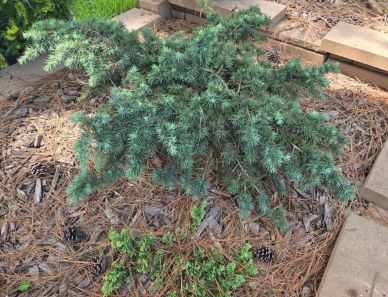
Planted Spring 2025
Prostrate Beauty is a very dense and lush cedar with a tight spreading form. These do best when in an elevated bed or an area that has been built up to prevent prolonged wet soil. It has one of the better colors among deodar cedars. Also, it is excellent for foreground plantings when a lower specimen is needed. It is not known to produce a leader but "staked" specimens creating an upright habit have been seen in nurseries lately. Glacier Blue is similar to Prostrate Beauty and develops a nice leader with a conical habit. Unfortunately, it has not been seen/available in recent years. This specimen receives 5 to 6 hours of morning sun each day.
Atlantica/Atlas
Blue Atlas
Planted Fall 2024
This Blue Atlas was 5" tall when planted. In July of 2026 it is almost 7' tall and coning. These were widely planted throughout north Texas and northeast Oklahoma in the late 1990's as "shrubs". Landscapers often planted these on the corners of houses, in entry ways and next to covered porches. Within a few years they were removed due to the "unexpected" growth. Nurserymen often suggest these as the southern alternative to the Colorado Blue Spruce. As a tree which can grow to 60+ feet in height, they should be planted in the open where no pruning will be necessary.
Sapphire Nymph
.
Horstmann
Horstmann
.